Pillar Guide · Wind Damage Repair
Wind Damage Repair in Beaumont
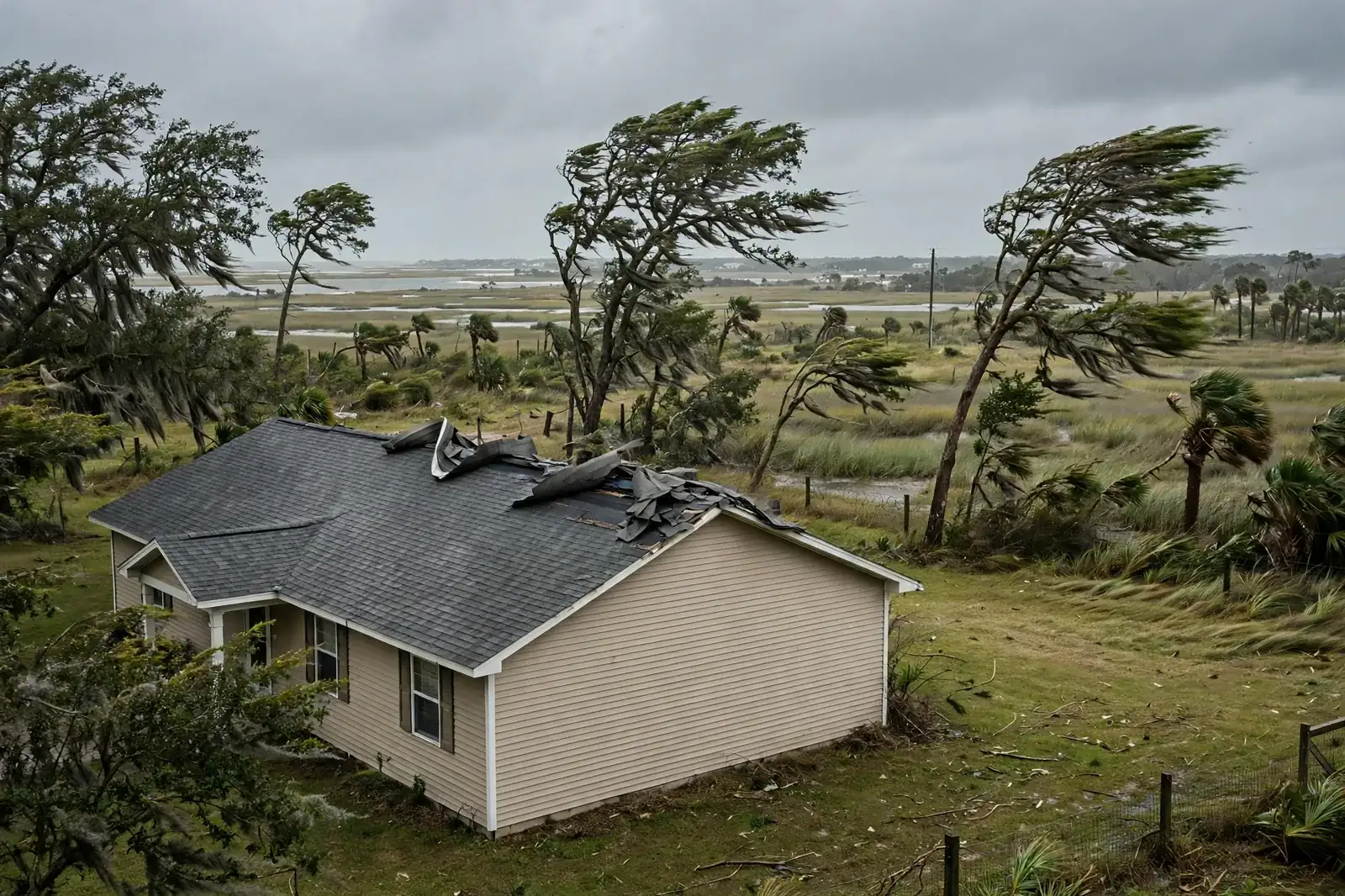
Wind damages a roof by working at its edges and bonds, often long before anything blows off. This guide explains how wind harm shows up in Beaumont, what can be resealed, what must be replaced, and how repairs hold in the next storm.
The Problem
How does wind actually damage a Beaumont roof?
Wind does not push evenly on a roof, it pulls. As gusts cross a ridge or an eave, the pressure above the surface drops and the shingles are lifted from below, flexing at the point where they are nailed and bonded. One strong event can tear material away, but the more common Beaumont pattern is cumulative, repeated lifting through storm seasons breaking seal bonds, creasing tabs at the nail line, and loosening ridge caps and edge metal a little more each time until a moderate storm finishes the job.
The results are easy to underestimate in calm weather. A lifted tab settles back and looks fixed. A creased shingle lies flat and hides its crack. Flashing bent back by a gust may sit nearly in place. Yet each of those failures is now an entry point waiting for wind driven rain, and Beaumont supplies that rain reliably. Wind damage is therefore best understood as the storm opening doors that the next rain walks through, which is why assessment matters even when nothing is dripping today.
Exposure decides which homes suffer. Corner lots, open streets, and houses at the edge of a neighbourhood take gusts without the shelter of surrounding buildings and trees, and the windward slopes and corners of any roof do the hardest work. Contractors read wind damage with that map in mind, checking eaves, rakes, ridges, and corners first. A homeowner who knows which parts of the roof face the weather can describe the problem more usefully and understand the repair scope when it concentrates exactly there.
Causes
What are the common forms of wind damage in Beaumont?
Wind attacks bonds, edges, and fixings before it removes material. These are the failures Beaumont contractors find most often after strong Gulf weather.
Broken shingle seal bonds
The adhesive strip bonding each course to the one below is the roof first defence against uplift. Heat, age, and repeated flexing weaken it until a storm breaks the bond across whole areas. Unbonded shingles may stay in place for months, chattering in gusts and letting driven rain underneath, and they cannot be trusted again without being properly resealed or replaced where the mat is also harmed.
Creased and folded tabs
A tab lifted past its flex point cracks along the line where it bent, visible on close inspection as a pale fracture line across the shingle. Folded tabs that were blown fully back and returned are weaker still. Creasing is permanent structural harm to the unit, and sealing it down only hides the crack until the next uplift tears it loose.
Lifted ridge caps
Ridge caps sit at the peak where wind pressure changes are strongest, and their fixings and seals take the strain of every storm. Lifted or missing caps open the very top of the roof, where water then runs down both slopes under the surface. Ridge damage after wind is common in Beaumont and should never be dismissed as a minor cosmetic loss.
Eave and rake edge lifting
Edges are where wind gets its first grip. Shingles and metal at eaves and rakes lift, fasteners pull through, and once an edge starts, gusts work along it and peel material in sequence. Edge failures also expose the decking edge and underlayment ends, letting rain into the structure at the point where the roof meets the wall below.
Loosened flashing and vents
Gusts flex flashing at chimneys and walls and rock vent stacks in their boots, breaking seals and enlarging fixing holes. The pieces remain in place but no longer exclude driven rain, so the leak appears in the next storm rather than the one that caused the harm. These loosened details are a major share of post wind leak calls in Beaumont.
Debris scouring and punctures
Wind turns branches, loose items, and neighbouring roofing material into projectiles and dragging loads across the surface. Impacts puncture and gouge, and debris dragged by gusts strips granules in tracks. After a strong Beaumont storm, a roof can carry wind damage and debris damage together, and both belong in the same assessment and repair plan.
The Process
How is wind damage repaired so it holds next time?
Walk the windward zones
The contractor inspects ridges, eaves, rakes, corners, and the slopes facing the storm, lifting tabs by hand to test bonds and looking for crease lines. Sound slopes are checked too, but the effort concentrates where wind works. The findings are recorded by zone so the repair scope matches the exposure map of your roof.
Decide reseal versus replace
Intact shingles with broken bonds but sound mats may be resealed correctly with compatible bonding material. Creased, torn, or missing units are replaced, and damaged caps, flashing, and vents are renewed. This judgement, made unit by unit, is the heart of wind repair, because resealing fractured material is the most common reason wind repairs fail early.
Rebuild edges and ridge securely
Edge courses and ridge caps are refitted with correct fixing patterns and sealed laps, since these zones will take the next storm first. Any decking edge damage found underneath is made good before the surface goes back. Corners receive particular attention, as uplift forces peak there and a weak corner restarts the peeling sequence.
Check the whole bond pattern
Before finishing, the contractor spot checks bonds across the repaired slopes and confirms gutters and flashing sit correctly after the disturbance. You are told which areas were resealed, which were replaced, and what that means for the next storm. That summary turns a one off repair into a known condition you can plan around.
In Detail
Why do wind repairs fail when they are only sealed down?
Sealant under a lifted tab answers the wrong question. If the tab lifted because its bond aged out across the whole slope, sealing a few visible spots leaves the rest unbonded and ready to go in the next event. If the tab creased as it lifted, its mat is cracked, and gluing it flat hides a fracture that flexes open under heat and wind. Contractors in Beaumont see the same roofs repeatedly when wind work is treated as gluing rather than as a bond and material assessment across the exposed zones.
The durable approach costs a little more on the day and far less over time. Sound units get their bonds properly restored, fractured units come out, and edges and ridges are refixed to a pattern that resists the first grip of the wind. It also matters that replacement shingles match the weight and profile of the existing roof, because a lighter unit in a windward field becomes the next weak point. Ask your contractor which units were replaced and why the survivors were judged sound, that conversation is the repair.
Local Conditions
How does Beaumont weather drive wind damage repair?
For wind damage repair, Beaumont's climate is not background detail, it is the cause behind most calls. Hurricane Harvey in 2017 stalled over Southeast Texas and caused severe flooding across the Beaumont area, flooding thousands of homes, while a United States rainfall record of 60.58 inches was recorded at nearby Nederland. Beaumont housing spans oil boom era historic homes from the early 1900s in and around the Oaks Historic District, mid century ranch and bungalow housing across South Park, Pear Orchard and the North End, and late twentieth century tract subdivisions on the west side in areas such as Dowlen West, Amelia and Calder Highlands.
['Lamar University', 'Neches River, along the east side of the city', 'Interstate 10, crossing Beaumont east to west', 'Dowlen Road retail corridor, including Parkdale Mall', 'Spindletop, site of the 1901 oil gusher, marked by the Spindletop Gladys City Boomtown Museum', 'McFaddin Ward House Museum on the Calder Avenue corridor', 'Texas Energy Museum in downtown Beaumont', 'Tyrrell Park and the Beaumont Botanical Gardens and Cattail Marsh area in the southwest of the city'] Beaumont has a humid subtropical climate in the Piney Woods region of eastern Texas and is among the wettest parts of the state, with annual rainfall around 60 inches in published climate summaries. A contractor who works in Beaumont reads that weather history in the roof itself, which is why local experience matters for wind damage repair.
Hurricanes and tropical storms are a recurring fact of life on this part of the Gulf Coast. Tropical Storm Imelda in 2019 also caused historic flooding in the city. None of that makes wind damage repair unusual work in Beaumont. It makes it routine work, done by contractors who see the same Gulf weather patterns on roofs across the city every week.
Cost Factors
What does wind damage repair cost in Beaumont?
Wind repair pricing depends on how much material was creased or lost versus merely unbonded. These rows cover the work Beaumont homeowners most often need after strong weather.
Ranges are general guidance, not a quote. The contractor confirms the final price after inspecting your roof.
When To Call
When should wind damage be checked in Beaumont?
Call when you find shingles or ridge pieces in the yard, see lifted or missing material, or hear new rattling and flapping sounds from the roof in gusts. Those are active wind failures, and in Beaumont the next rain is rarely far away. A roof with open bonds and lifted edges will admit driven rain at points that have never leaked before, so the check belongs in the same week as the storm, not on a seasonal list.
Also arrange a check after any storm strong enough to bring down limbs or damage fencing in your area, even if your roof looks complete. Creasing and bond failure are quiet harms. Finding them in calm weather lets you choose resealing or replacement deliberately, at standard scheduling, instead of meeting the same damage again as an emergency leak during the next named storm.
Go Deeper
Where does wind damage repair go from here?
City Page
Wind Damage Repair in Beaumont, TX
The local service page for wind damage repair across Beaumont, with first steps, response and coverage.
Open the city page →Neighbourhood
Wind Damage Repair in Old Town
How wind damage repair plays out in Old Town, with the problems local homes see most.
Wind Damage Repair in Old Town →Cost Guide
Roof Repair Cost
Typical Beaumont price ranges for this kind of repair and what moves the price.
Read the cost guide →Wind Damage Repair by neighbourhood
The Wind Damage Repair in Beaumont, TX city page covers the whole city. Each neighbourhood page below looks at wind damage repair on its own streets, with its own housing and exposure.
FAQ
Wind Damage Repair questions, answered
Shingles that lifted without creasing, with sound mats and intact fixing lines, can often be resealed properly and will perform well. The contractor tests the mat by hand and checks the nail line before deciding.
Creased or torn units must come out. If a recommendation reseals everything without distinguishing the two, ask for the reasoning, because that shortcut is the most common cause of repeat wind failures.
Wind damage accumulates. The big storm may have broken bonds and creased tabs without removing anything, leaving the roof primed to shed material in the next moderate event. The smaller storm gets the blame for harm the earlier one prepared.
This is exactly why post storm bond checks matter in Beaumont. Restoring bonds after the major event prevents the embarrassing and expensive sequel in ordinary weather.
Yes. Caps protect the peak, the joint between two slopes, and they sit where uplift is strongest. A lifted cap line admits water to the top of both slopes and the ends of the decking, a disproportionate amount of harm from a small component.
Ridge condition is part of every wind assessment for that reason. Refixing or replacing caps is modestly priced work compared with the leaks a failed ridge produces.
Have loose edges, lifted caps, and ageing seal bonds dealt with in calm weather, and keep branches that overhang or could strike the roof cut back. Most storm losses begin at a pre existing weak point that a gust can grip.
A pre season roof walk is the practical step. It converts the unknowns, bond condition, edge fixings, flashing seals, into a short priced list you can clear before the weather tests them.
Talk to someone about your roof today
Describe the problem on one call and get connected with a local Beaumont roofing contractor.