Shingle Roof Repair in Beaumont, TX
Damaged shingle sections removed and matched with new material.
View Shingle Roof Repair →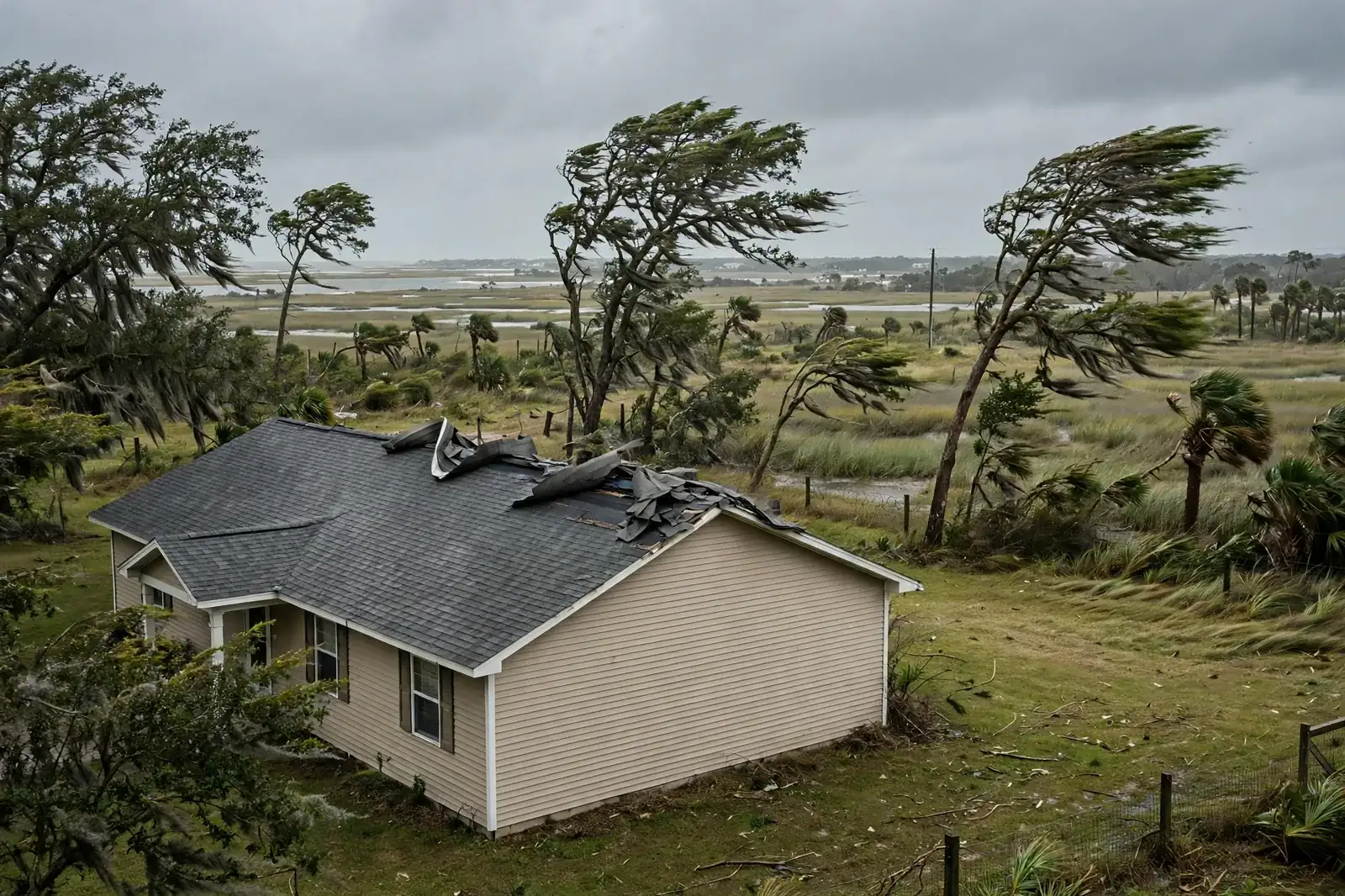
Wind Damage Repair · Beaumont, TX
Wind damages a roof by working at its edges and bonds, often long before anything blows off. This guide explains how wind harm shows up in Beaumont, what can be resealed, what must be replaced, and how repairs hold in the next storm.
The Situation
Beaumont wind arrives with tropical systems, with sharp thunderstorm outflows, and with the long, gusty rain bands that can work a roof for a full day. The city housing stock, much of it single storey and low pitched, presents broad slopes and long eave lines to that wind. Damage patterns across the city follow exposure, open and corner properties first, tree sheltered streets less, and every storm redraws the same map closely enough that contractors know which areas will call first.
Age is the city wide multiplier. As seal bonds age across a whole subdivision built in the same years, a single strong storm can unbond roofs street by street, even where no material is lost. Beaumont sees this as a wave of resealing and section work after major wind, most of it invisible from the ground. Homeowners who assume no missing shingles means no damage miss the main injury their roof actually took.
The follow on rain defines the stakes locally. Wind alone rarely soaks a house, wind plus the Beaumont rain that travels with it does. City contractors therefore treat post wind checks as leak prevention with a deadline, the next band of weather. Getting bonds, edges, and ridges sound between events is the rhythm of roof care in this climate, and the homes that follow it come through storm seasons with far fewer emergencies.
First Steps
You walk the property noting fallen shingles, cap pieces, and debris, and identifying which slopes faced the storm. Keeping found material helps the contractor judge what came from where. This ground record plus your account of sounds and leaks frames the roof inspection that follows.
On the roof, tabs are hand tested across windward slopes, ridges, and edges, and creases, loose flashing, and vent movement are recorded. The attic is checked for new driven rain entry. Findings are mapped by zone, because wind scopes should follow exposure, not guesswork.
You receive a plan separating units to reseal, units and components to replace, and any decking or flashing work underneath. Pricing follows that split, so you can see how much of the bill is restoration and how much is new material.
Response
Active leaks and missing material are handled first, then bond restoration and edge work are scheduled in calm windows, since resealing and replacement both need dry surfaces to cure and fix correctly. Beaumont contractors watch the forecast closely in storm season and will stage a job, making the roof weather tight immediately and returning for the bonding work when conditions suit, rather than doing delicate work on a damp roof.
Across the city after a major wind event, expect the same triage as other storm work, open roofs before quiet ones. If your damage is bonds and creasing only, a short wait for a dry, calm slot produces a better repair. Your contractor should keep you informed of where the job sits and what, if anything, to watch in the meantime.
Coverage
Wind Damage Repair covers all ten Beaumont neighbourhoods, and the contractor you are connected with works across the city. Pick your neighbourhood below for the local picture, or call and describe the problem from wherever in Beaumont you are.
More Repairs
Damaged shingle sections removed and matched with new material.
View Shingle Roof Repair →Cracked, curled and worn asphalt shingles repaired or replaced.
View Asphalt Shingle Repair →Ponding water, split seams and blisters repaired on flat and low slope roofs.
View Flat Roof Repair →Loose panels, worn fasteners and rust spots repaired on metal roofs.
View Metal Roof Repair →FAQ
As soon as conditions are safe and the surface is dry enough to work on, ideally within days. Bonds and creases are readable at any time, but lifted material should be made secure before the next rain tests it.
If debris is on the roof or limbs are involved, do not climb up yourself to look. A ground survey and photos are enough for the first call, the roof walk belongs to the contractor.
Yes, unbonded and creased areas deteriorate with every gust and admit driven rain in the meantime. A tab that could have been resealed in spring may tear away by autumn, converting restoration work into replacement work.
Waiting also blurs the record of which storm caused what. A prompt, dated inspection keeps the cause clear for your own planning and for any discussions you have about the damage.
Corners concentrate uplift, and if the underlying fixing pattern, decking edge, or starter course is weak there, replacements inherit the same problem. Repeated failure at one spot is a sign the detail underneath needs rebuilding, not just the surface unit.
Tell the contractor about the history. A good wind repair investigates why that corner lets go, and fixes the grip, the fixings, and the edge build up, not only the shingle that left.
They can be made considerably more resistant with correct fixing spacing, sound fascia to screw into, and properly seated edge metal and starter courses. No detail is storm proof in absolute terms, but most edge failures start at fixings that were sparse or into softened timber.
Where fascia or decking edges have softened from past leaks, renewing that timber is part of the wind work. New fixings into rotten wood are no fixings at all, whatever the surface looks like.
Describe the problem on one call and get connected with a local Beaumont roofing contractor.