Homeowner Guide
How Long Does a Roof Repair Take in Beaumont?
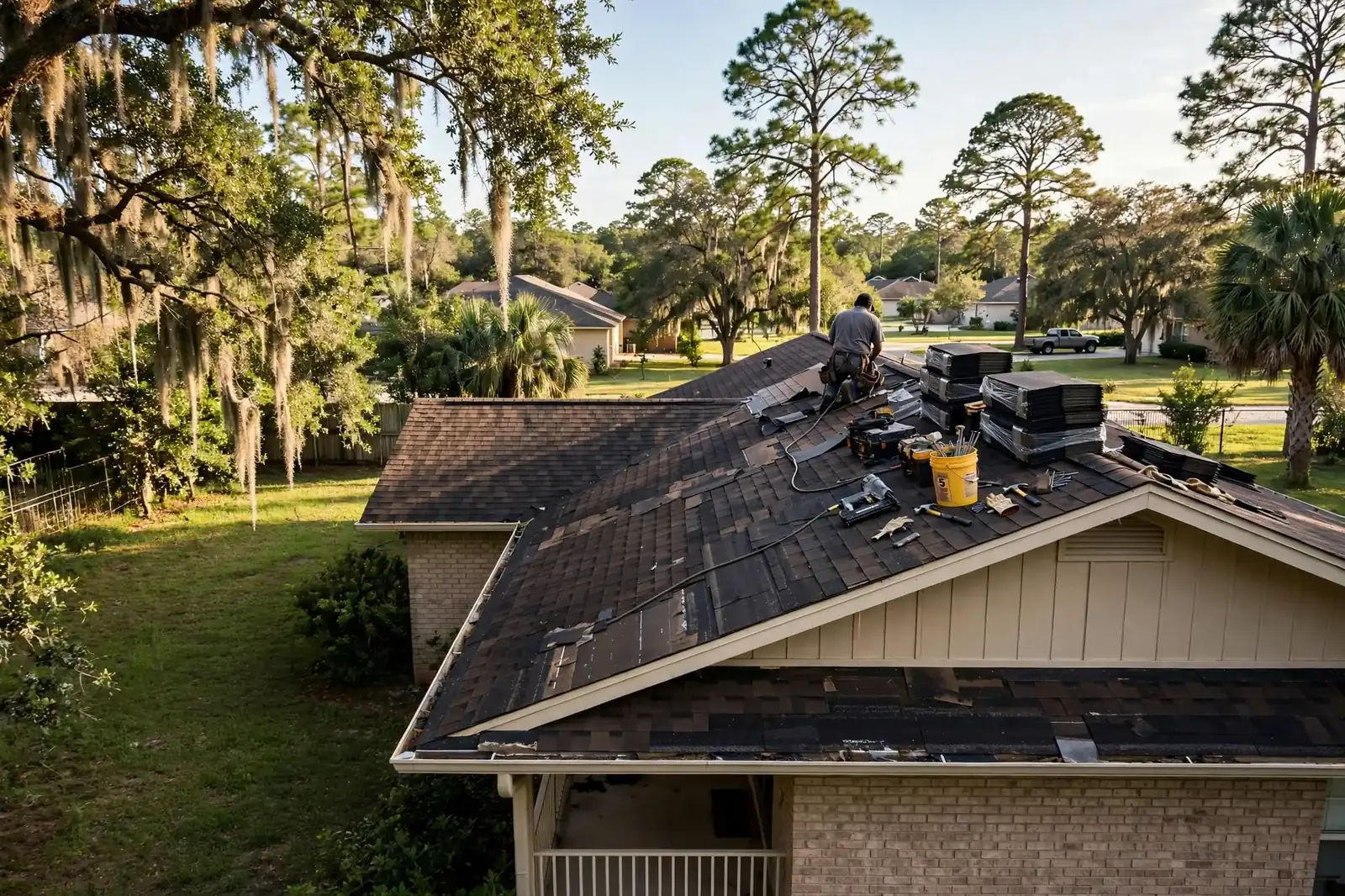
Homeowners usually ask how long a roof repair takes before they ask anything else, and the honest answer is that the visit itself is often short while the road to it has several steps. This guide sets out realistic timing for small and larger jobs in Beaumont, explains what stretches a schedule, from hidden decking damage to Gulf weather, and shows the part you can play in keeping the work to the dates agreed.
Guide
How long does a small repair take?
A small, contained repair is often finished within a single visit lasting a few hours. Replacing a cracked pipe boot, swapping a damaged vent, or resealing around a skylight all involve opening one detail, fitting the new part or seal, and closing the surface back up neatly. Once the contractor is on the roof and the area is open, the work itself is compact. The hours on the roof are only part of the story, though, because booking the visit, inspecting first, and agreeing the scope all sit around that short burst of hands on work.
The common small jobs give a fair picture of the scale involved. Pipe boot replacement runs from $150 to $400, vent replacement from $200 to $500, and skylight reseal and flashing from $250 to $600, each as general guidance confirmed once the roof has been inspected. A small section of shingle repair, at $250 to $750, can take a little longer than those details because the surrounding shingles have to be lifted and woven back in so the surface sheds water as one piece. Matching an older profile or colour adds care, and care takes minutes that add up.
Guide
How long do larger repairs take?
Larger repairs stretch across a full day, and some run into a second or third day of work. Tracing a leak whose entry point sits far from the ceiling stain, rebuilding flashing along a long chimney or wall joint, or patching a broad worn area on a flat section all involve more opening up, more fitting, and more checking as the work proceeds. Flat roof patch repair runs from $350 to $950 and roof leak repair from $300 to $900 as general guidance, and jobs toward the top of those ranges are usually the ones that take the longer visits.
Work below the surface is what most often turns one day into several. If lifting the damaged area reveals decking that has gone soft, the soft boards have to come out and sound ones go in before the surface can be rebuilt over the top. Sagging roof assessment and repair, at $600 to $1,800, involves checking the support below the surface as well as the surface itself, so it is naturally a staged job. Each stage has to be finished and checked before the next begins, which is slower than surface work alone but is what makes the repair last. Expect the contractor to update the expected finish as each of those stages is opened and seen.
Some larger jobs are deliberately split into stages with a gap between them. A protective first stage stops water getting in straight away, and the lasting repair follows in a dry window once the area has dried and the full scope is confirmed. Counted in hours on the roof, the whole job may still be modest, but counted on the calendar it can span a week or more. Ask the contractor to set out the stages, what each one completes, and what the roof will look like between them, so the timeline holds no surprises.
Guide
What can make a repair take longer?
Hidden damage is the most common reason a repair outgrows its first estimate. Decking that has rotted along a water path, underlayment that has stayed damp for months, or a second entry point discovered while tracing the first all add work that nobody could confirm from the ground. The surface has to come up before any of it can be seen, which is why honest timelines always carry a little room for findings. A contractor who explains that possibility at the start, with photographs when it happens, is managing the job properly rather than making excuses. None of that can be priced or timed honestly until the surface has been lifted and looked at.
Access and materials shape the clock as well. A steep pitch, a roof cluttered with vents and junctions, or a joint that must be shaped on site to fit a chimney all slow careful work down. Older Beaumont homes sometimes carry shingle profiles or flashing details that are no longer stocked locally, so matching material has to be ordered in, adding days before the visit rather than hours during it. Repairs following a Gulf storm face a further stretch, because every contractor in the area is answering urgent calls at the same time and booking slots fill quickly. Asking at booking stage whether any material needs ordering tells you if that wait applies to your job.
Guide
How does weather in Beaumont affect timing?
Rain is the biggest single influence on repair timing in Beaumont. Most lasting repairs need a dry surface to bond and seal properly, and heavy Southeast Texas rain can arrive with little warning, turning a booked day into a watching brief. Sealants and flat roof products also need time after fitting before rain tests them, so a contractor plans the work around a forecast window, not just a dry morning. A repair rushed onto a wet roof to keep a date often fails early, which costs far more time than waiting for the right window.
Hurricane season stretches the picture further. When a storm is forecast to reach the Gulf coast, planned work gives way to making homes safe, and after it passes, contractors work through urgent leaks before returning to booked repairs. A planned job may move by a day or two while that urgent work clears, which is frustrating but reflects a fair order of priorities across the city. Clear communication matters most at these moments, so ask how you will be told if your date moves, and what number to call if water starts coming in while you wait.
Guide
What happens between the call and the repair?
The sequence between calling and a finished repair has more steps than most homeowners expect. It begins with your description of the problem, then an inspection visit, then a written scope and price, then a booked slot for the work itself, and finally the repair visit with clean up and a closing check. Beaumont Roof Repair TX connects you with a local roofing contractor at the first step, and that contractor handles the inspection, the advice, and the repair. Knowing the sequence helps, because a delay at any one step is easier to understand when you can see where in the chain it sits.
The inspection visit itself is usually a single appointment, with findings explained from photographs taken on the roof. Once you have agreed the scope and price, a firm date can be set, and straightforward jobs often move quickly from agreement to booking. Where water is actively coming in, the order changes: emergency roof tarping at $200 to $550 can protect the home first, before the full inspection of hidden damage takes place. That protective stage keeps the inside of the house dry while the lasting repair is planned without panic, and its cost sits within the overall picture you agree. Keep the agreed order of those stages in writing, so a change later on is easy to follow.
Guide
How can you help the work run on time?
A precise description at the first call saves more time than almost anything else. Say which room the stain sits in, when the dripping happens, whether it follows heavy rain or any rain at all, and what you can see from the ground. Dated photographs of the stain and of the roof area above it give the contractor a head start, so the inspection begins at the right detail instead of hunting across the whole roof. Mention earlier repairs to the same area as well, because a patched detail that has failed again needs a different look from a fresh fault. Photographs taken before any earlier repair, if you have them, are worth passing on at the same time.
Practical preparation on the day matters more than it sounds. Moving vehicles away from the work area, keeping pets inside, and having the attic access clear before the crew arrives all prevent small delays that stack up. Point out the ceiling stain position from inside before work starts, because that reference helps tracing from above. Keep children and visitors clear of ladders and the area below the work, and agree where removed material will be placed. None of this is difficult, but a job that starts cleanly at the agreed hour usually finishes at the agreed hour too.
Keep Reading
What should you read next?
Related
Emergency Roof Repair in Beaumont, TX
Continue with the related page on this site.
Emergency Roof Repair in Beaumont, TX →FAQ
Questions, answered
Often it can, once the inspection has confirmed the fault is contained. Jobs such as a pipe boot or a vent replacement involve one detail, standard materials, and a surface that closes back up the same day, so a few hours on the roof is a realistic picture.
Because water rarely drops straight down from where it enters. It can run along decking, follow a timber, and appear in a ceiling some distance from the fault, so tracing means checking each likely entry point above the stain until the path makes sense. Ceiling leak tracing and repair runs from $300 to $850 as general guidance, reflecting that detective work. Once the true entry point is found, sealing or rebuilding that detail is often the quicker half of the job.
Light, passing rain may only delay a start until the surface dries, while steady heavy rain usually means rescheduling lasting work that needs a dry bond. Protective work is different, because tarping is designed for wet conditions and can go ahead to stop water entering. Your contractor should contact you if the date has to move, explain whether the delay is hours or days, and confirm the roof is left safe and sealed in the meantime.
For a straightforward repair, the chain of a call, an inspection, an agreed scope, and a booked visit can run its course in days rather than weeks, weather permitting. The honest answer for your home comes from the contractor once the inspection is done, so ask for each stage with a date attached instead of one overall promise at the start.
Tarping is a protective stage, not the lasting repair. Emergency roof tarping at $200 to $550 covers securing a covering over the damaged area so rain stays out while the true fault is traced and the permanent work is planned for a dry window. It buys time and prevents further damage inside the home, but the damaged detail underneath still needs its proper repair afterwards, and the two stages should be priced and explained separately.
Talk to someone about your roof today
Describe the problem on one call and get connected with a local Beaumont roofing contractor.